Custom Notebook and Journal Design for Stationery Brands
Expanding beyond planners is a natural next step for many stationery brands. Whether you're adding a guided journal, a lined notebook, or an entire collection of paper products, each new product is an opportunity to serve your customers in a different way—and strengthen your brand.
But while planners, notebooks, and journals may look similar on the shelf, they're designed with completely different goals in mind. The way people use them, interact with them, and move through their pages is unique, which means each product deserves its own design strategy.
In this post, we'll look at what sets notebooks and journals apart from planners, why custom design makes such a difference, and what goes into creating products that feel intentional, cohesive, and built specifically for your brand.

Notebooks vs. Journals vs. Workbooks — What's Actually Different?
Before you start designing, it helps to understand what makes each product unique. While notebooks, journals, and workbooks can seem similar at first glance, each one is created with a different purpose in mind—and those differences shape everything from the interior layout to the overall user experience.
Understanding these distinctions will help you design more intentional products, create a better experience for your customers, and price your work with confidence:
Notebooks: Primarily blank or lightly lined pages. Maybe a soft design element — a thin rule at the margins, a subtle watermark, minimal typography. The user fills it with their own content. Think of a classic notebook as a blank canvas. It's meant for quick notes, brainstorming, capturing thoughts, sketching. The design is supportive and gets out of the way.
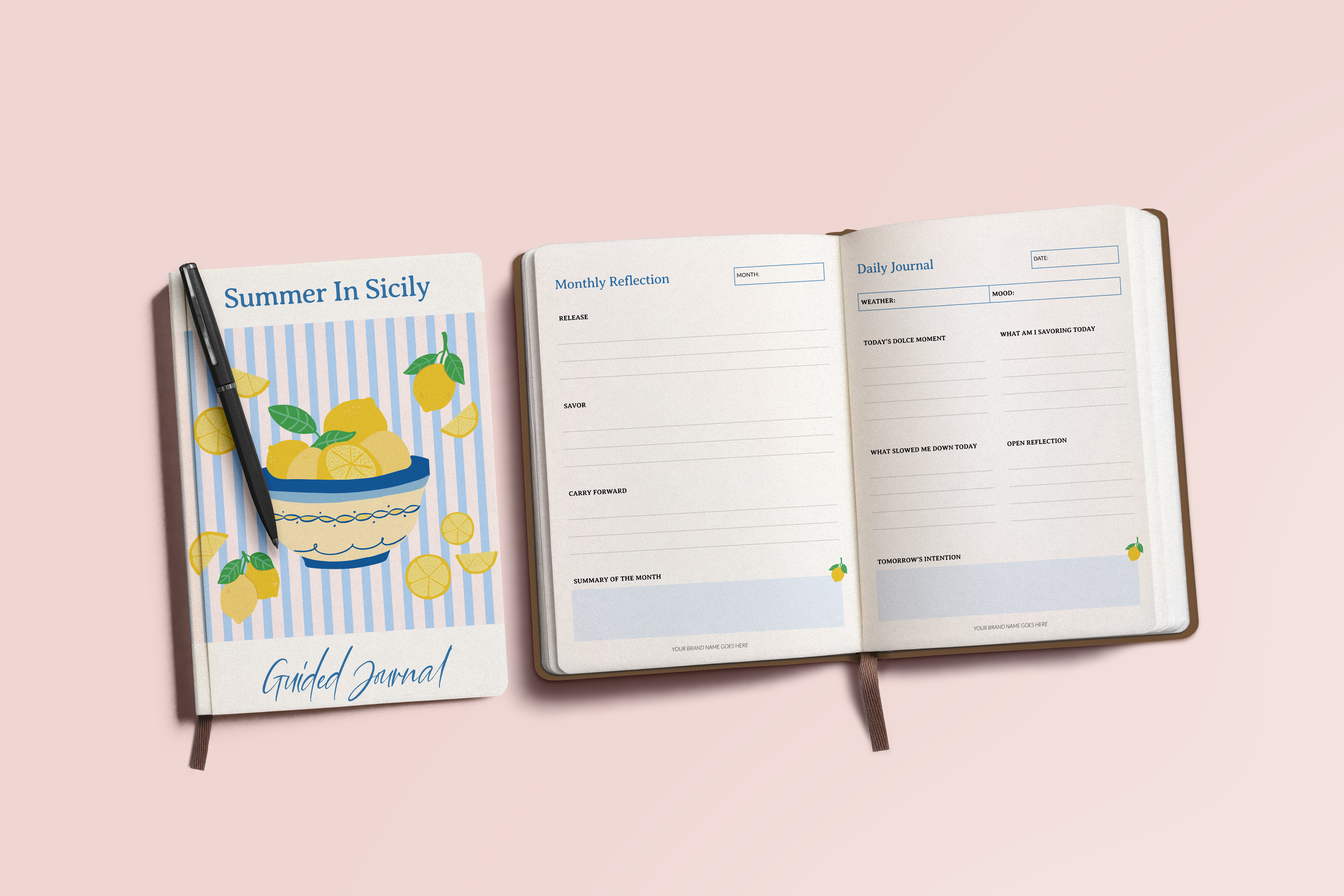
Journals: Contain content strategy. Whether it's guided prompts on every page, section breaks with reflection questions, or monthly themes, there's intentional structure. The design serves the prompts. The layout creates a rhythm for the user's practice. A journal is an experience, not just a place to write.
Workbooks: Educational products designed alongside course content or training. They're structured with learning goals, worksheets, assignments, and space for completion. Heavy on typography, clear hierarchy, guided workflows, section breaks.
Here's why this matters:
A custom notebook design focused on blank space and paper quality costs differently than a guided journal with daily prompts and custom illustrations. A workbook with worksheets and exercise layouts costs more because of content integration. You can't price these the same way.
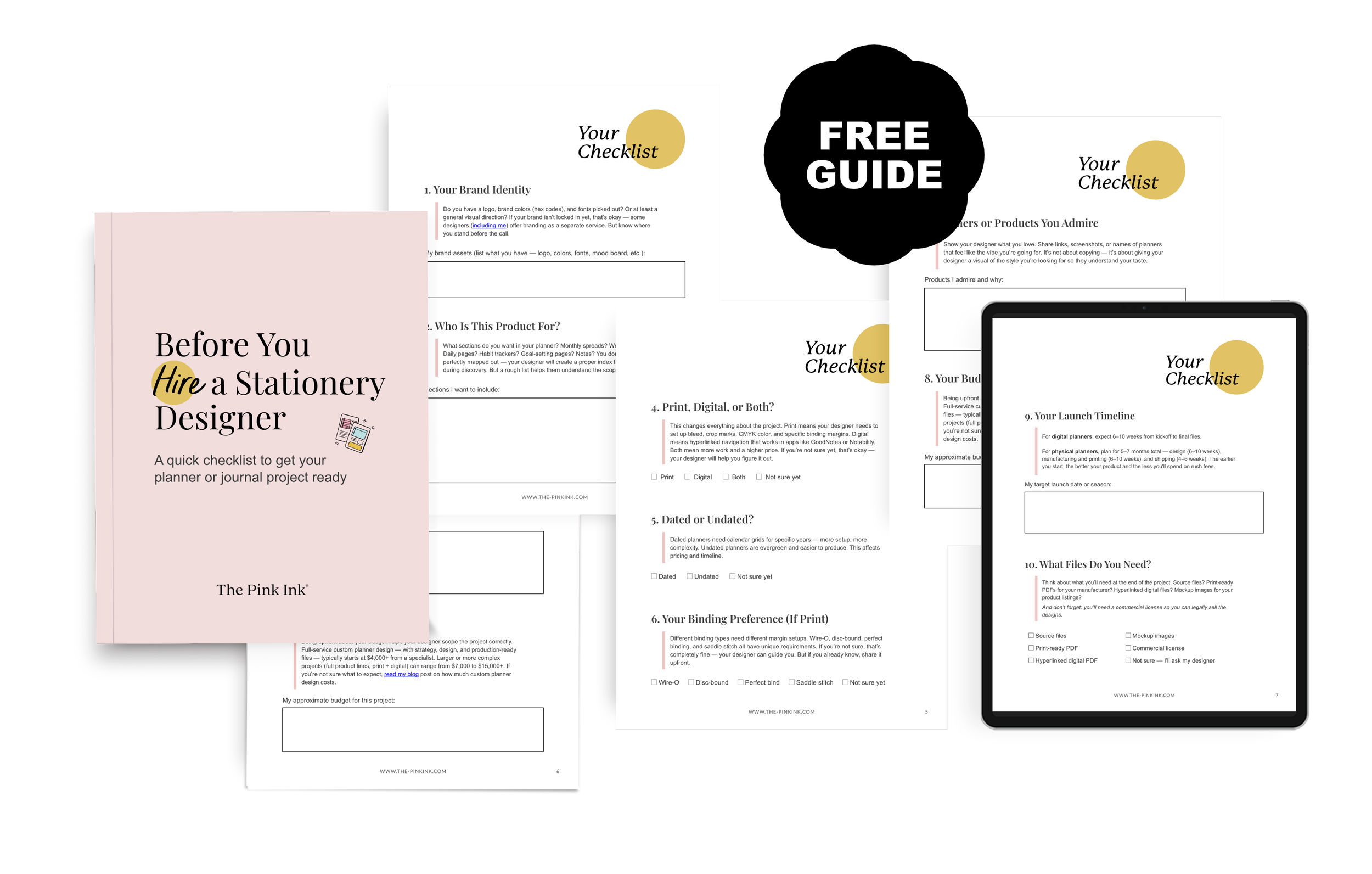
DOWNLOAD THE CHECKLIST »
Choosing Notebook and Journal Sizes
Size is more than just an aesthetic choice, it’s strategic. The size you choose signals purpose and positioning to your customer before they ever open the book.
5.5x8.5 (Half Letter): The most popular notebook size, offering a balance of portability and writing space. Ideal for personal notebooks, gratitude journals, and wellness journals.
6x9: A slightly larger format that feels more premium and luxurious. Ideal for high-end journals, guided journals, and art journals.
5.8x8.3 (A5, European Standard): A widely used international size with a clean, premium aesthetic. Ideal for brands selling to global audiences or aiming for a modern, elevated look.
5x8: A smaller, more portable format that's easy to carry throughout the day. Ideal for pocket notebooks, travel journals, and everyday note-taking.
8.5x11 (Full Letter): A larger format that provides plenty of writing space for structured content. Ideal for workbooks, educational materials, planners, and large-format art journals.
Custom Sizes: A unique format designed to help your products stand out from the competition. Ideal for brands looking to create a distinctive customer experience, with the tradeoff of higher production costs.
Binding Options for Notebooks and Journals
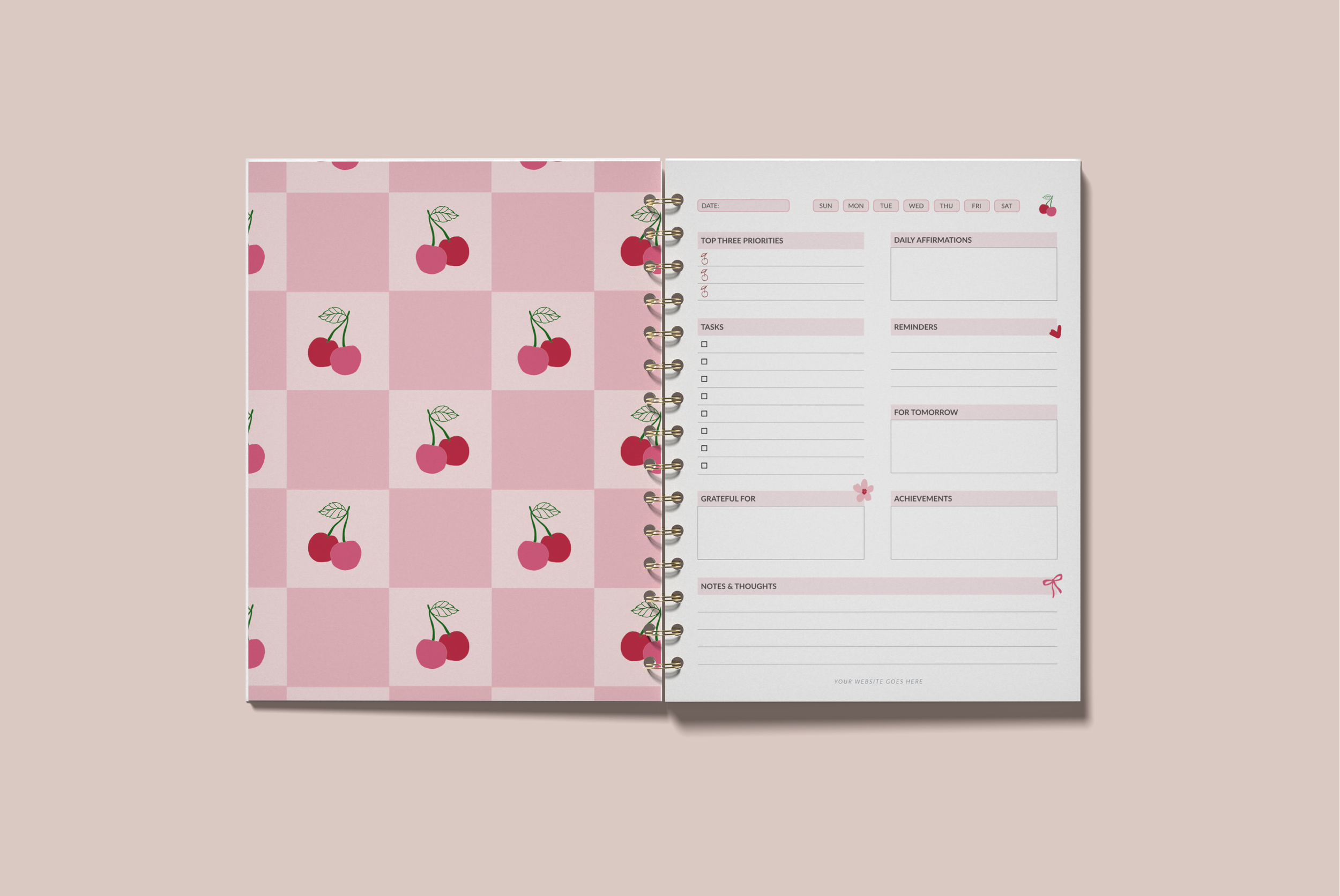
Once you've chosen the right size, it's time to think about binding. The binding you choose influences both the user experience and the production process, so it's worth taking the time to find the option that's the best fit for your product:
Perfect Binding: Pages are glued to the spine, creating a clean, professional finish that's commonly used for journals and premium notebooks. It works well for products with 80 or more pages, although it doesn't lay completely flat when open. Production costs are generally moderate.
Wire-O (Spiral) Binding: Metal coils are threaded through the spine, allowing the notebook to lay completely flat for a more functional writing experience. This binding is commonly used for workbooks and guided materials, though it typically has a less premium appearance and costs more than perfect binding.
Saddle Stitch Binding: Pages are folded and secured with staples along the center fold, making it an affordable option for notebooks under 60 pages. It lays flat when open and is a great choice for thinner products like gratitude journals, booklets, and simple guided notebooks.
Coptic Binding: Pages are hand-sewn with exposed stitching along the spine, creating a distinctive handcrafted look and a premium user experience. It lays flat when open, offers a completely custom aesthetic, and is best suited for luxury journals or art books, though it is typically the most expensive binding option.
For most branded journals and notebooks, I recommend perfect binding. It feels finished, premium, and professional. Wire-O works if a flat laying product is critical to your user experience.
💌 Interested in working with The Pink Ink to create your custom planner or journal?
Fill out an inquiry form to start the conversation, share your project details, and help me determine if we’re a good fit for each other.

Why Paper Quality Matters More for Journals Than Planners
Paper is one of the most important decisions you'll make when designing a notebook or journal because it's the part of the product your customers will interact with the most. A beautiful cover may catch someone's attention, but the writing experience is what keeps them reaching for your notebook day after day:
Paper Finish: For notebooks and journals, uncoated paper is almost always the best choice. Unlike coated paper, which has a smooth, glossy finish, uncoated paper provides a natural writing surface that allows pens and pencils to glide comfortably without excessive smudging. It's the standard choice for products designed to be written in.
Paper Weight (GSM): GSM stands for grams per square meter and is a way of measuring how thick and substantial a sheet of paper feels. For notebooks and journals, I generally recommend choosing paper between 90–120 GSM. Lighter paper, such as 80 GSM, can feel thin and is more likely to show ink from the opposite side of the page. Heavier paper creates a more premium writing experience while helping reduce bleed-through.
Paper Color: The color of your paper influences both the look and feel of your product. Bright white paper creates a crisp, modern aesthetic, while cream or off-white paper offers a softer, more classic feel that's often easier on the eyes during longer writing sessions. Neither option is inherently better—the right choice depends on the experience you want to create for your customers.
Custom Design vs. Print-on-Demand Templates
Here's the distinction that matters for your brand positioning: custom notebook design is not the same as using a print-on-demand template.
Print-on-demand services offer templates. You customize the template — change the colors, add your logo, maybe adjust the cover. But you're still working within their constraints. You can't change the binding type. You can't negotiate paper stock. The template is fixed.
Custom notebook design means I design everything from scratch. We decide on binding together. We choose paper. We design unique interior page layouts that serve your brand and your user's needs. We integrate your brand colors, typography, and aesthetic fully into every page. The final product is yours — not a tweaked template with your logo slapped on it.
Custom design may cost more upfront, but your notebooks will feel like branded products, not generic items. Your audience can tell the difference. They feel it when they hold the journal. And if you're positioning yourself as a premium brand, these choices make all the difference.
How Notebooks and Journals Fit Into Your Full Product Line
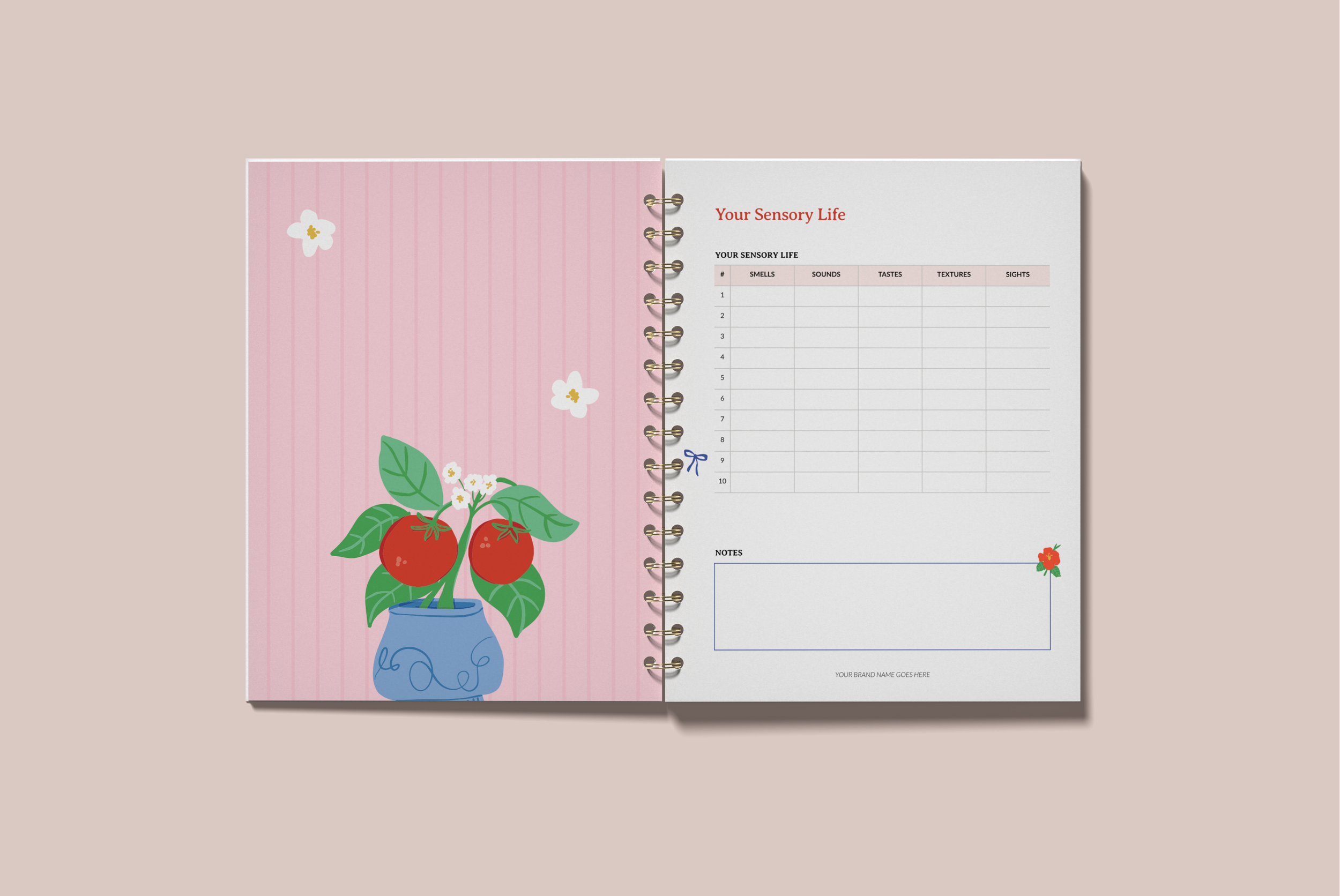
As your stationery brand grows, your notebooks and journals should feel like a natural extension of your planner—not just additional products. While each serves a different purpose, together they create a cohesive collection that gives customers more ways to engage with your brand.
Your planner helps customers organize their time. Your journal creates space for reflection and creativity. Your notebook is designed for capturing ideas, notes, and inspiration. They each have a unique role, but they should share the same visual identity through consistent typography, color palettes, illustrations, and brand personality. Whether your products are displayed on a retail shelf or featured in your online shop, customers should immediately recognize them as belonging to the same brand.
That's why I design with the full product line in mind. Instead of treating each product as a separate project, I help brands build collections that grow intentionally over time. A customer might purchase your planner first, then return later for a coordinating journal or notebook. Each new product strengthens your brand and makes the collection feel even more complete.
For brands that are regularly expanding their collections, an Unlimited Design Subscription makes it easy to maintain that consistency. With one dedicated designer creating your planners, journals, notebooks, packaging, and marketing assets, every new product feels cohesive, intentional, and unmistakably yours.
How Custom Notebook Design Gets Priced
Custom notebook design is usually scoped similarly to planner design — by unique page layout count, interior complexity, and customization level.
A simple blank notebook (same page repeated 100+ times) costs less than a guided journal with 10 different page types and custom illustrations. Workbooks with worksheets, learning flows, and integrated content cost the most because they require more conceptual work.
Pricing typically ranges from $1,000 for a straightforward blank notebook to $4,000+ for a premium guided journal with illustrations and complex interior structure. A designer should be able to explain how they arrived at their price based on the actual work required.
Why Your Brand Deserves Custom Notebook Design
Generic, template-based notebooks commoditize your brand. They look like every other notebook on the shelf. Your audience chose you for a reason — because your planner is beautiful, functional, aligned with their values. That deserves to extend to every product you make.
When you invest in custom design across your entire line, you're not just creating products. You're building a brand ecosystem. Each product reinforces the others. Your customer's daily experience with your brand stays consistent whether they're using your planner, writing in your journal, or jotting notes in your notebook. That consistency builds trust and loyalty.
Custom design also gives you pricing power. A truly designed, branded product commands higher prices than a template-based one. Customers will pay more for something that feels intentional and custom-made for them.
Ready to expand your product line?
Start with my custom planner design service or explore my unlimited design subscription if you're launching multiple products.
Not quite ready to hire? My free checklist helps you organize everything before that first designer conversation. Download the free checklist →