Custom Planner Design Cost: What to Budget in 2026
What does it actually cost to create a custom planner from start to finish? If you’ve ever asked yourself why prices vary so much, there’s a good reason.
When you start looking into custom planner design, you’ll quickly find a wide range of prices. But the number attached to a design quote is only part of the picture. The cost of creating a finished planner can depend on everything from the scope of the design and number of pages to whether you’re creating a digital product, a printed product, or both.
That doesn’t mean you need to have every detail figured out before you get started. It simply means having a clear idea of what goes into the process, plus what’s included in your budget, so you can easily plan your project.
In this blog post, I’ll walk through the different costs to consider when creating a custom planner, so you can build a budget that makes sense for your product and your goals.
What Custom Planner Design Actually Costs
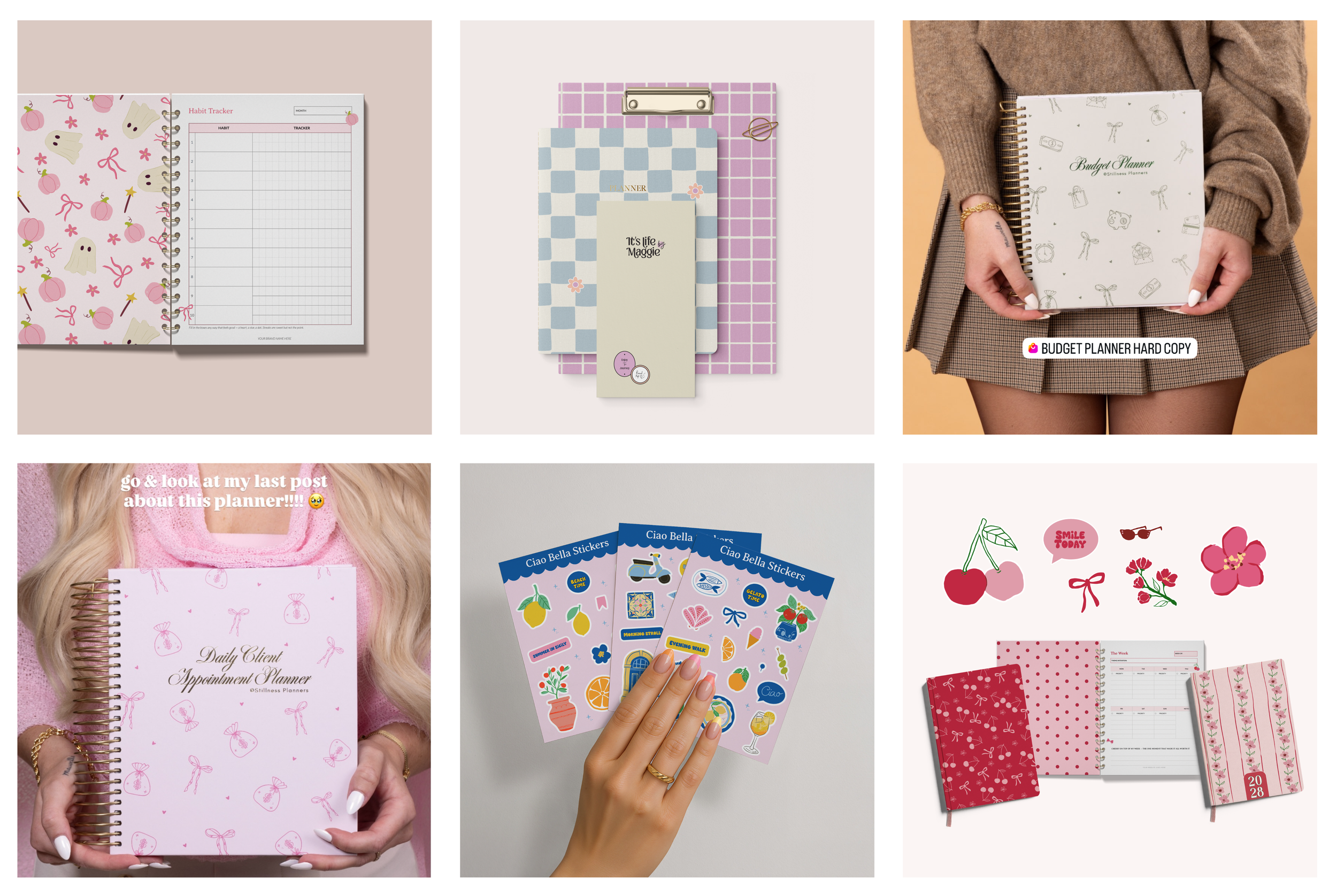
Custom planner design from a specialist who understands stationery products typically ranges from $4,000 to $8,000 for a full project. That range depends on several factors:
Page count. A 52-page weekly planner is a very different scope than a 365-page undated planner with multiple sections, tabs, and custom layouts. More pages means more design time.
Complexity. Clean, repeating templates cost less than products with unique page designs, infographics, or interactive elements. A project with a straightforward weekly layout is a smaller scope than a custom productivity system with trackers, dashboards, and reflection pages.
Custom illustration. If your project includes hand-drawn artwork, custom stickers, or illustrated covers, that adds to the creative scope. The time and attention to detail required will also influence the price.
Strategy and research. A specialist designer doesn't just make pages look nice. They research your market, map out your product structure, and build a design strategy before touching a layout. All that work is an investment into making sure your planner doesn’t just look pretty but is sellable.
Licensing. Some designers retain copyright and only grant you a limited license that allows you to sell the product without fully owning the design. Others include a full commercial license with unlimited sales. The licensing terms directly affect the value of what you're paying for, so don’t forget to read the fine print before signing!
Exclusivity and buyout. If you want an exclusive design created specifically for your brand, or you’d like full ownership of the final files and the flexibility to modify, resell, or license the design yourself, those options can be reflected in the project cost. The important thing is to understand what’s included first so you can choose the level of ownership that makes sense for your product and plans.
At The Pink Ink, a typical custom planner project runs $5,000–$7,000 and includes discovery, strategy, full page design, multiple proof rounds, production-ready files, and a full commercial license with exclusivity — you own the design completely. If you want to learn more about what’s included in custom design projects, you can click here.
Where brands get stuck: Not every planner design quote covers the same scope of work. A lower-cost option may only focus on page layouts, while a specialized project can include product strategy, research, custom design, proofing, licensing, and production-ready files. Rather than comparing prices alone, look at what’s included in each quote and how closely it aligns with what you need to bring your project to life.
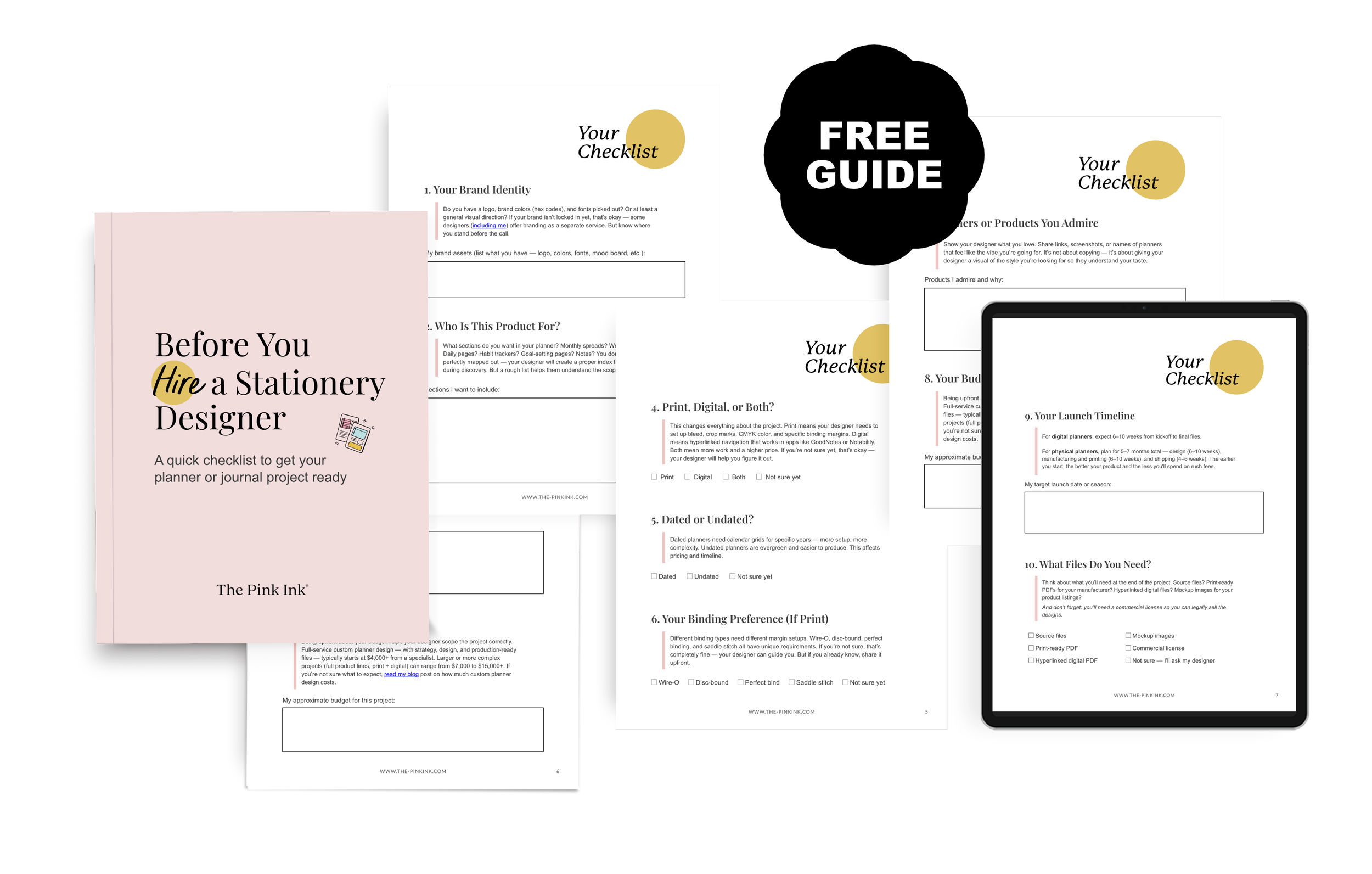
DOWNLOAD THE CHECKLIST »
The Costs Most People Forget to Budget For
Now that you know what goes into the cost of the design itself, there’s another part of the budget to consider – the costs of putting the finishing touches on your product once it has been designed.
Depending on your product and market, that might include printing, packaging, photography, marketing, and more. These numbers will vary, so think of this as a guide to the main categories—not a complete budget spreadsheet.
Printing. The success of your first print run may depend on quantity, paper quality, binding type, and any special finishes like foil stamping or spot UV. Most brands start with 200–500 units for a first run. And the more you order, the more the cost-per-unit is going to decrease!
Where brands get stuck: Choosing a design direction without considering how it will be printed. Page count, binding, paper weight, and special finishes can all affect your printing costs, so it’s helpful to consider these factors early in the design process.
Packaging. Loyal customers look forward to an enjoyable experience from the minute they receive their planner in the mail until the day they finish it. Taking your packaging to the next level is optional, but it can affect your perceived value. Some brands skip this entirely and do just fine. Others invest in unboxing because it fits their brand.
Photography and mockups. Images of your products are essential to make sales. They’ll be seen on your website, Etsy listings, and social media. Depending on the products and budget, some brands invest in product photography. Others choose mockup templates. And yet there are some designers (like myself), that provide mockups as part of product delivery!
Website and e-commerce. Wherever you're selling, whether that's your own site, Etsy, or Amazon, there are costs that come with setting up your storefront. Think about potential platform fees, domain costs, payment processing, and even web design when creating your budget.
Marketing. Getting your product ready to sell is only half the process. You also need a plan for getting it in front of the right people, whether that's through social media, email, paid ads, or even PR outreach. Your budget can vary widely, but marketing is worth planning for from the start.
Why the Cheapest Option Usually Costs More
A custom planner is about more than the design file. Once you factor in strategy, printing, packaging, photography, marketing, and everything else that goes into bringing a product to market, having a clear picture of the full scope makes it much easier to plan your budget.
The goal isn’t to find the cheapest option or spend the most. It’s to understand what you’re paying for and choose the approach that makes sense for your product, goals, and budget.
And wherever you are in the process, there’s a next step that can help:
Ready for professional design? Explore custom planner design for strategy, design, proof rounds, and production-ready files.
Building multiple products? Explore the unlimited design subscription for ongoing design support.
Want to design it yourself? Learn with Services Mastery.
Need a lower-cost starting point? Explore the PLR membership for designer-quality templates you can customize.
Need your brand first? Explore custom branding to create your visual foundation.
Not sure what you need yet? Download the free checklist to help you map out your project.