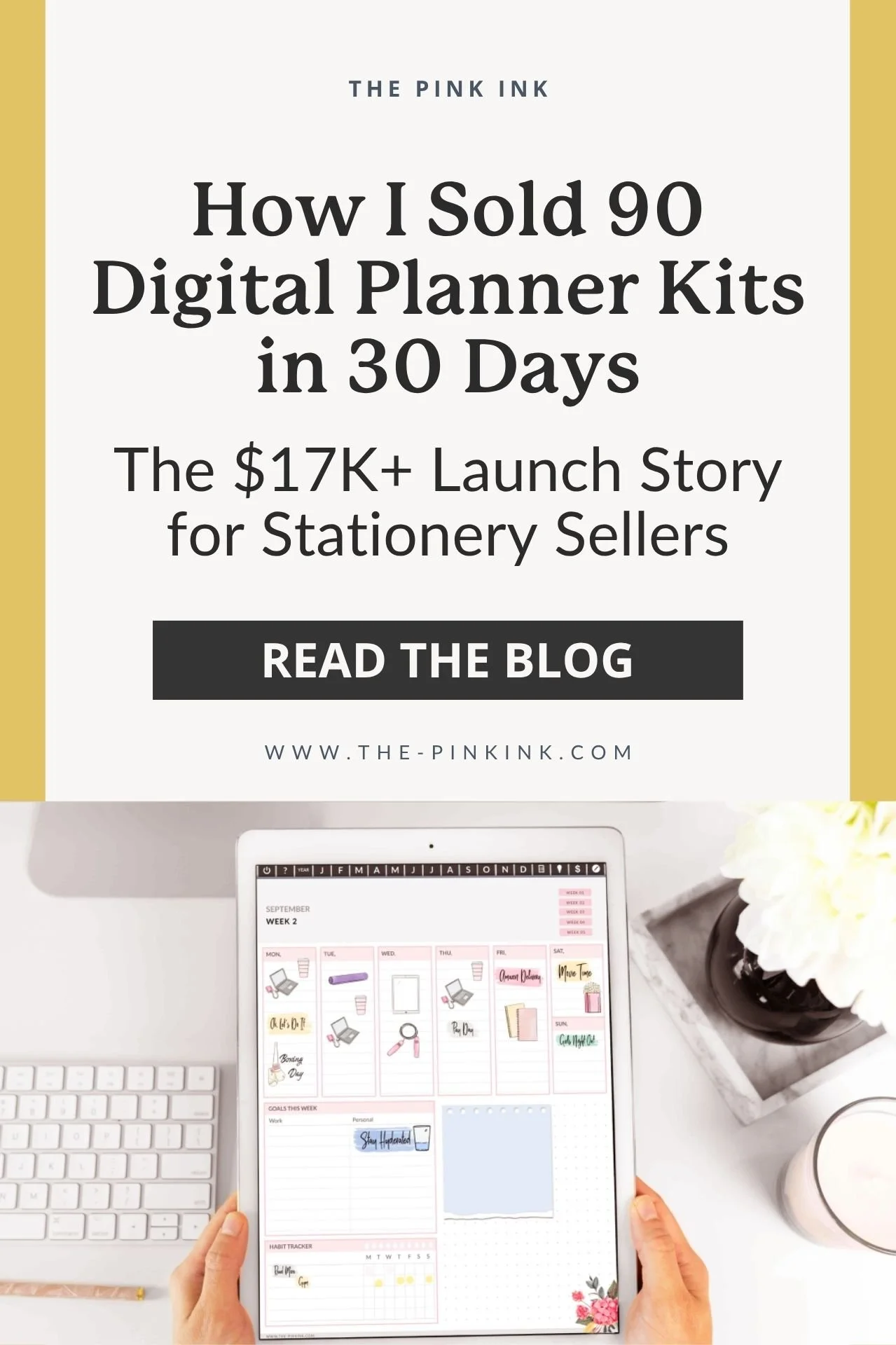
In 2020, I launched a digital planner kit. Thirty days later, 90 of them had sold and the launch had brought in over $17,000.
I’m sharing the full story here because the strategy worked for one specific reason — and that reason is why mycustom planner design clients today: small stationery sellers struggle with cohesive branding and a cohesive product line. They don’t need more random templates. They need a family of products that look like they belong together.
If you’re thinking about launching your own digital planner kit or selling more cohesive products, this post breaks down what I did and the offer mechanics that actually worked.
I’m also sharing the one thing I’d do differently now, and it’s the exact gap my unlimited monthly design subscription was created to solve for brands ready to grow more consistently.
If you’d rather skip the DIY and have me build a cohesive product line for your brand from scratch, click hereto share your vision with me so we can talk about your project!
The Problem Small Stationery Sellers Struggle With
Most digital planner sellers piece things together.They buy one template here, another there, mix in a Canva freebie, and try to make it all look like one brand.
The thing is, this approach doesn’t always work. Instead of seeing a cohesive collection of products, customers may feel like there’s no clear theme to the shop they’re browsing.
That’s the problem the kit was built to solve: cohesive branding + a cohesive product line, ready to customize without months of design overwhelm.
It’s the same problem I solve today — only now I solve it through custom planner design projects for individual brands and through the unlimited monthly design subscription for stationery brands that need an ongoing in-house designer.
If this sounds familiar — if your products don’t feel like a family — keep reading. We can fix it!
What Was in the Kit
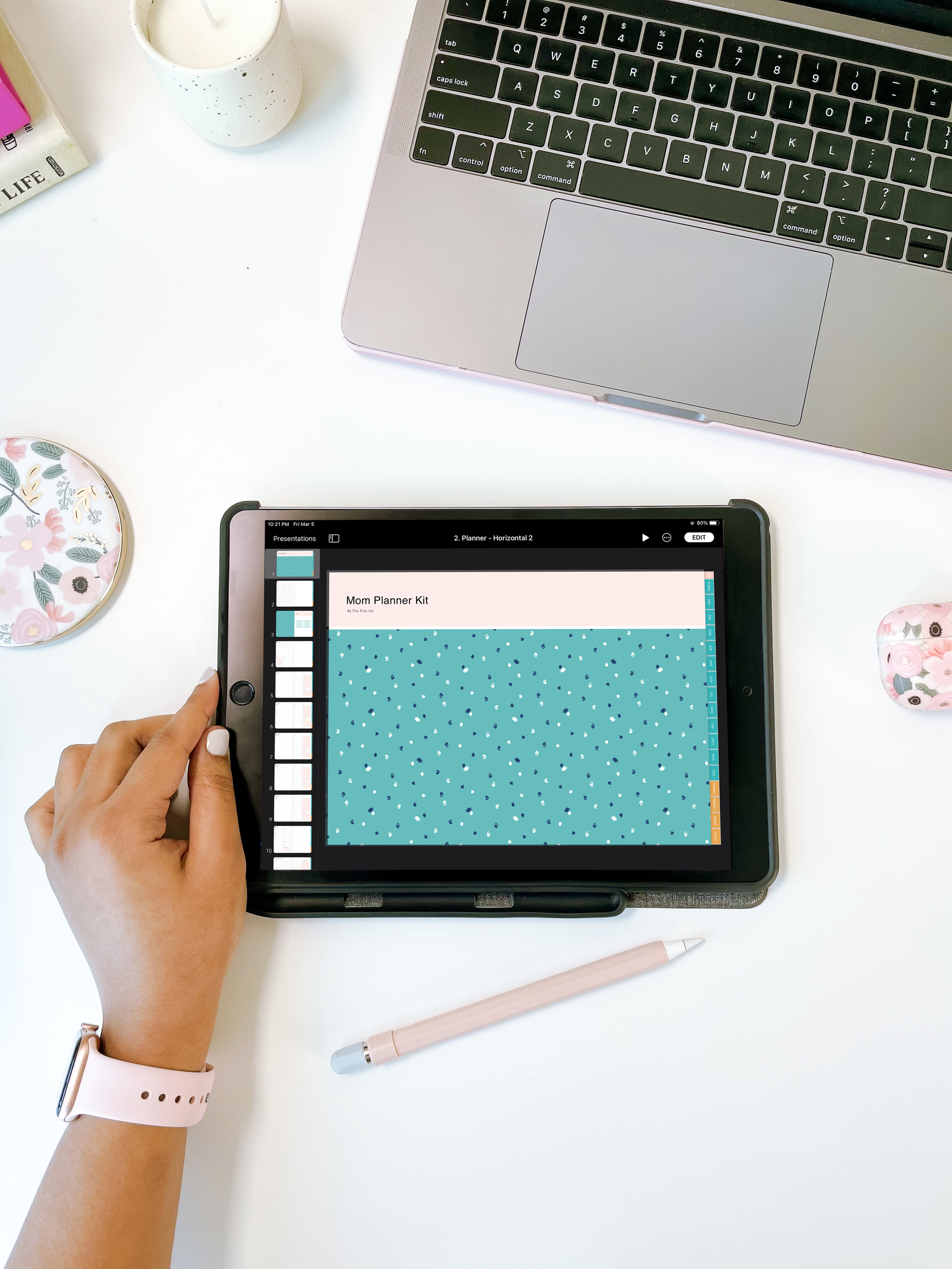
Each kit was a full collection. Not a single planner, but rather a whole product line a seller could launch their shop around.
Each kit included:
A horizontal digital planner
A vertical digital planner
A horizontal digital notebook
A vertical digital notebook
A sticker pack
The native source files in Keynote and Affinity Publisher 2
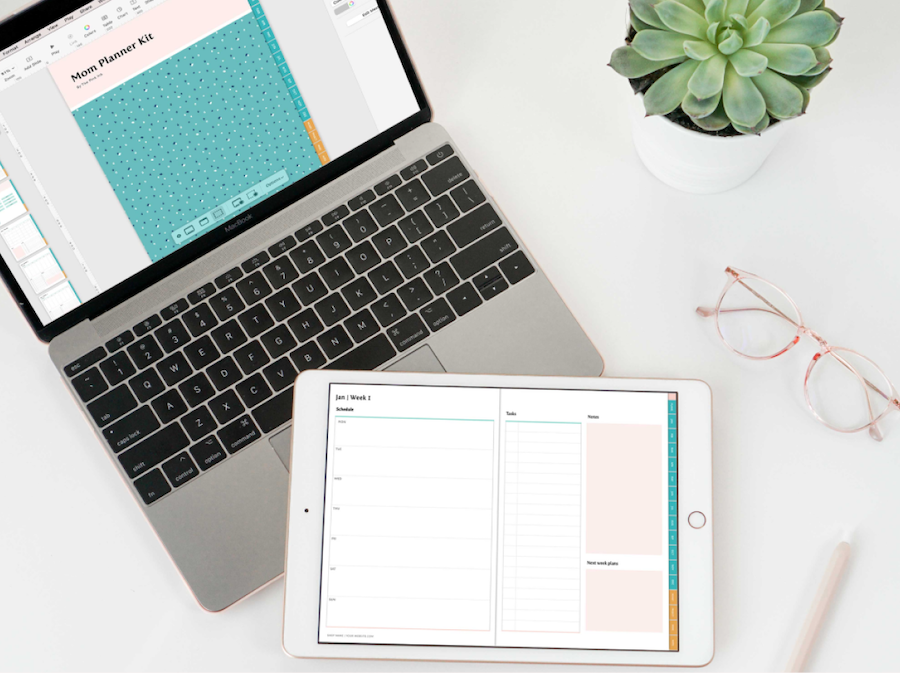
That last detail really made these collections stand out. Most digital planner kits at the time only gave you a flat PDF. Mine gave you the working files so you could actually customize them. I’m talking about everything from changing the branding and swapping the colors to restructuring the layout without rebuilding from scratch.
If you want a deeper breakdown of what’s in a Digital Planner Kit and how to use one, I wrote a full guide here.

The 7 Niche Editions (and Why Niche Beats Generic)
I didn’t launch one generic kit. I launched seven niche editions across two launches — because every stationery seller was telling me, “I don’t know who my planner is for.”
Launch 1 (the original four):
Essential Edition (the most popular — broad appeal)
Mom Edition
Business Edition
Teacher Edition
Launch 2 (added based on audience demand):
Student Edition
Travel Edition
Virtual Assistant Edition
Content Creator Edition
The reason niching down works is because it helps sellers create intentional products for a specific audience instead of trying to appeal to everyone. In these planner kits, each edition came pre-thought-through for a specific buyer. The Mom Edition included pages designed for mompreneurs, while the Teacher Edition followed a structure that fit classroom planning. Sellers who bought a kit didn’t have to figure out their niche, ideal customer, or what pages to include — it already did the niching for them, making it easier to create a cohesive brand and market to the right audience.
If you want help niching your own product line — that’s exactly what we work through in custom planner design projects. Niching is an essential part of the strategy process that comes before designing.

The Strategy Behind My $17K Digital Planner Kit Launch (Step by Step)
How creating niche-specific planner kits helped sellers build a more cohesive, professional-looking shop — without spending hours trying to make random products match or figuring out their brand from scratch.
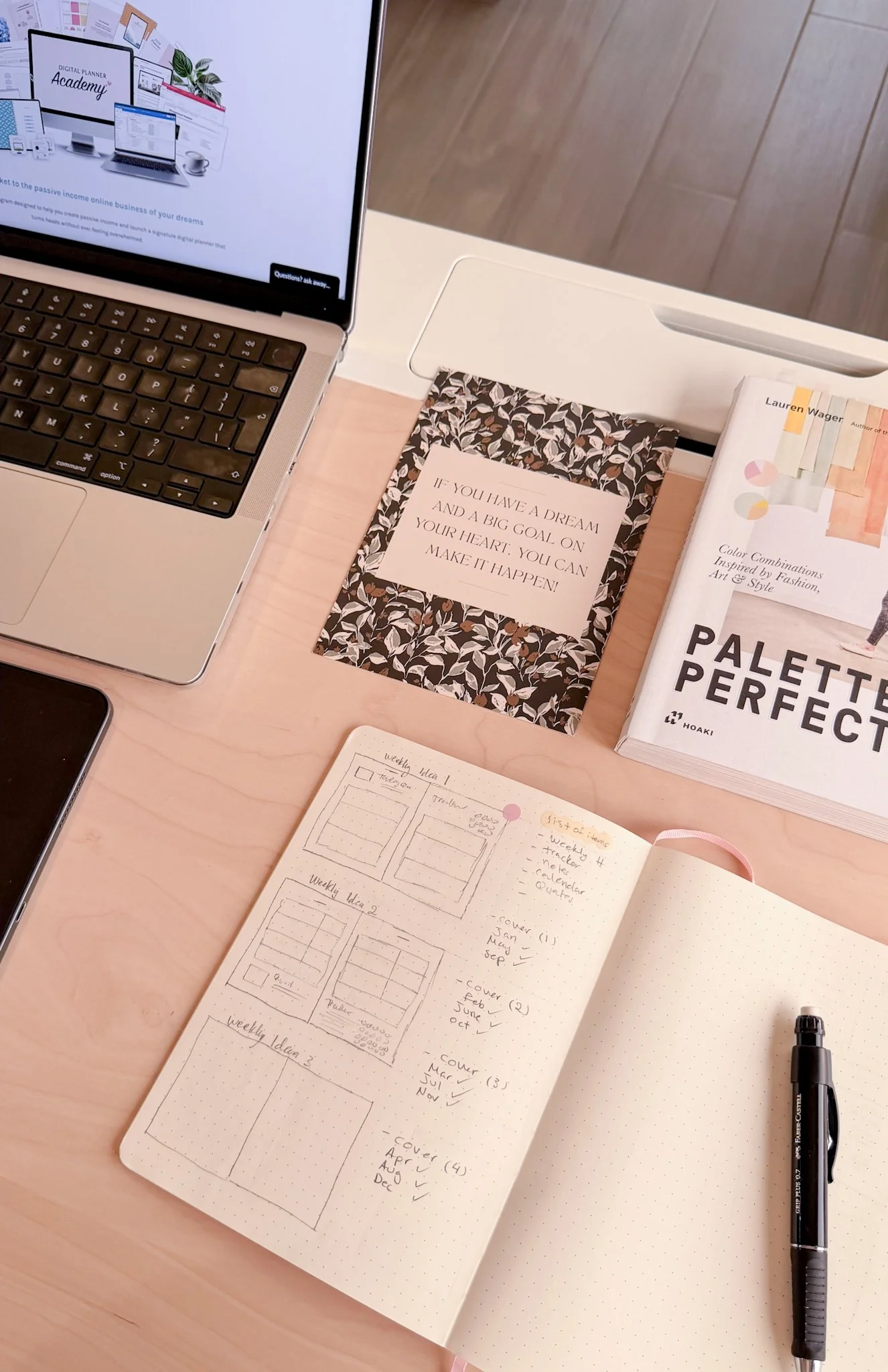
Step 1: Built an email waitlist (this did 80% of the work)
The waitlist was the single biggest reason the launch worked. I started talking about the kit on Instagram weeks before it dropped. Anyone who was interested joined the waitlist, and that gave me a warm audience ready to buy on launch day.
If you’re building a stationery shop, starting a waitlist before your next product launch can make a huge difference over time. Even a small list begins to compound, giving you an audience that’s already interested and ready to buy what you create next.
Step 2: Asked my audience for the color palettes
I posted Instagram Stories asking my followers which color palettes they wanted me to use. They voted. They named favorites. By the time the kit launched, the buyers had already invested attention into the product before they ever saw a price.
This is the trick: people support the products they had a hand in shaping.
Step 3: First buyer got the kit free
The very first person to buy got the kit free, and I announced this the day before launch.
It created instant urgency. Everyone wanted to be the first. The clock started the moment the doors opened. (And the buzz from the freebie winner posting about it brought in more buyers.)
Step 4: Intro pricing, then a price jump
The kit launched at $197. Mid-month, I bumped it to $297. Anyone who wanted the lower price had to act early.
This kind of launch structure tends to create two natural waves of buyers: people who jump in early to take advantage of the lower launch price, and people who decide to buy later once the upcoming price increase gives them a reason to stop waiting and make a decision.
Step 5: Course members got $97
My existing students from my digital planner design course got a private offer at $97 instead of $197. It rewarded loyalty without devaluing the kit publicly.
Most of them paid full price anyway because the loyalty discount felt like a bonus.
Step 6: Behind-the-scenes content kept the momentum
Throughout the launch I posted Instagram Stories of the design process — building the planners, picking the color palettes, packaging the files. People watched the kit get made. By the time they bought it, they already felt invested in it.
That’s the whole secret to launching: build the product with your audience, not just for them.
💌 Interested in working with The PinkInk!
Fill out an inquiry form to start the conversation, share your project details, and help me determine if we’re a good fit for each other.
The Numbers — $17K+ in 30 Days
By the end of the month:
90 kits sold
~$17,730 in revenue (a mix of $97, $197, and $297 sales)
No paid ads — purely email + Instagram Stories + the email waitlist
If you’d told me in 2019 that one product launch could bring in five figures of revenue, I wouldn’t have believed you. The reason it worked wasn’t tactics — it was that I solved the cohesive branding problem stationery sellers had been telling me about for months.
DOWNLOAD THE CHECKLIST »
What Surprised Me (the Honest Part)
Two things didn’t go to plan, and they taught me more than the launch itself.
The 2-day customization service flopped. After the kit sold, I added a paid offer: pay me to customize your kit for you over 2 days. Zero people booked it. Why? Because the kit was already so customizable that buyers could DIY it — they didn’t need me for that part.
But buyers kept asking the same question. “How do I turn the undated planner into a dated one without breaking all the hyperlinks?”
That question came up over and over. So I built a mini-course teaching exactly that — and it was a huge success.
The lesson: listen to what customers actually ask, not what you think they should buy. The market tells you the next product. You just have to pay attention.
Why I Retired the Kit and What I Sell Today
I retired the original kit not because it didn’t work, but because my audience kept evolving past it.
Sellers wanted more than templates. They wanted a designer who would build their full collection without them having to think about layout structure, hyperlinking, file formats, or revisions. They wanted in-house design without hiring full-time.
So today I work with stationery brands three ways:
Custom Planner Design Service — for brands launching a single bespoke product or a flagship line. Strategy + design + production-ready files in 4-8 weeks.
Unlimited Monthly Design Subscription — for established stationery brands that need consistent product support from an in-house designer. Unlimited design requests for one flat monthly fee.
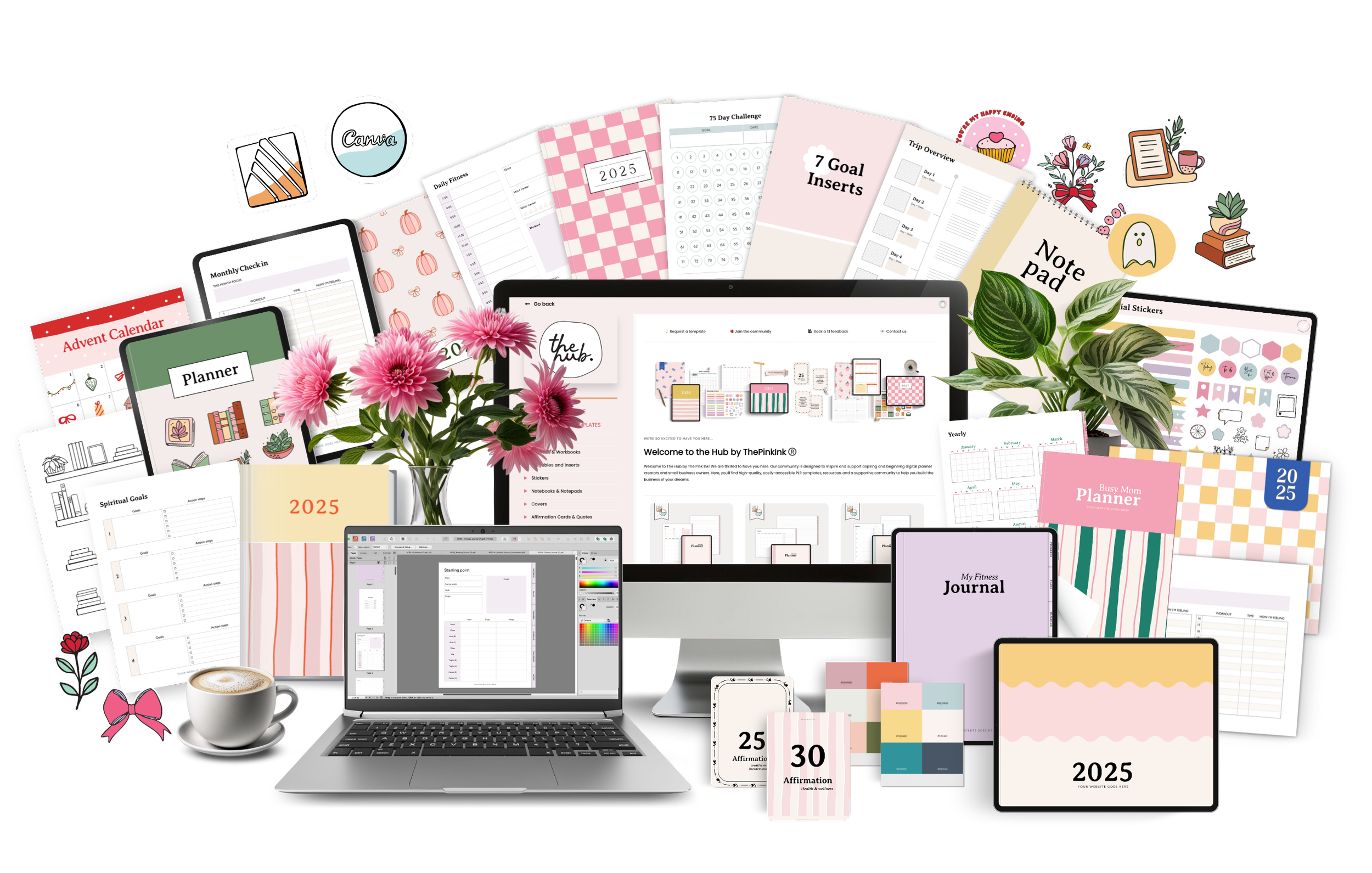
The Hub Membership — for sellers who still want the cohesive-template experience the kit gave them, just updated and ongoing. A full library of editable planner, journal, and stationery PLR templates with commercial licenses.
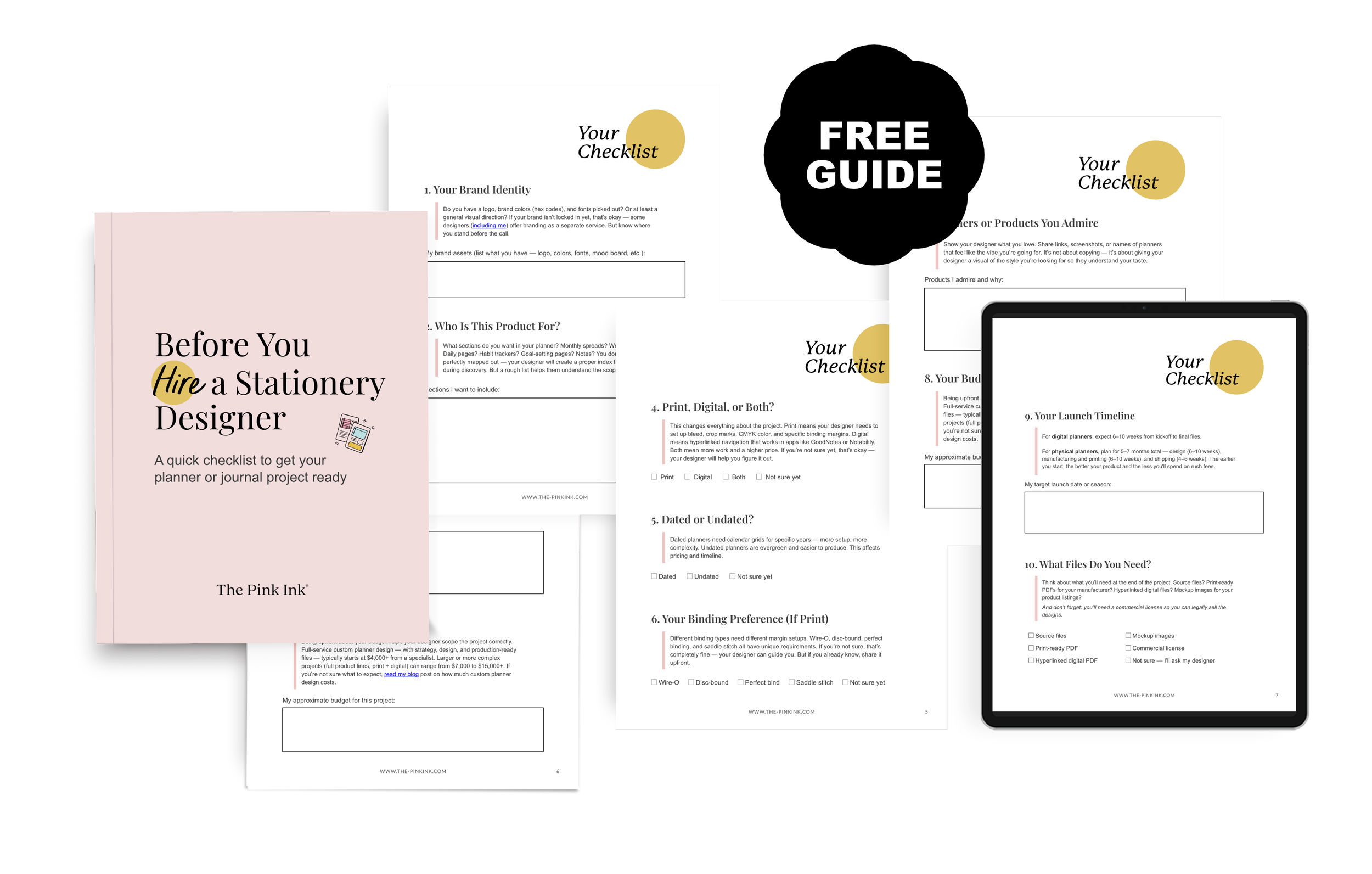
If you’re starting to think about hiring a designer for your stationery brand, grab my free Hire-a-Designer Checklist — it walks you through everything you should have prepared beforehand so the process feels smoother, clearer, and far more productive on both sides.
What I’d Do Differently Now
Three things, looking back:
I’d niche the kit even further. I think 12 would have done even better. Every additional niche-fit targeted a new potential buyer.
I’d test pricing higher. $197 was already a strong price point. I suspect $247 or $297 would have done the same volume — that’s $4,500 to $9,000 left on the table.
I’d build the dated-planner training upfront. The buyers asked for it. If I’d known they’d ask, I’d have included it from launch day.
Most of these lessons are baked into how I run custom planner design projects today — niching, pricing strategy, anticipating customer questions before launch.
Want a Cohesive Product Line for Your Brand?
If you saw yourself in any of this — the cohesive-branding pain, the “my products don’t look like a family” feeling, the wish that someone could just build the line for you — there are three paths depending on where you are right now:
You want done-for-you templates you can customize: Join The Hub Membership. Same idea as the kit, ongoing. Editable PLR templates with commercial licenses.
You want a bespoke flagship product or full collection: Book a custom planner design project. Strategy, design, and production-ready files for one product or a full launch.
You want an in-house designer without hiring full-time: Apply for the unlimited monthly design subscription. I become your dedicated designer and you receive unlimited requests and weekly drops, with no strings attached.
Not sure which is right? Grab my free Hire-a-Designer Checklist — it’ll help you decide based on where your business is right now.
Final thoughts
The kit launch worked because it solved a real problem (cohesive branding + cohesive product line) with a real product, sold to an audience I’d already built trust with.
That’s still the whole game — whether you’re launching templates, hiring a designer, or scaling a stationery brand. Solve a real problem. Listen to your buyers. Don’t be afraid to retire when something better is calling.
xx Shay