How to Prepare for Your First Call with a Planner Designer
Booking your first call with a planner designer can feel a little intimidating. You know what you want to create, but you may not know exactly what information to bring, what questions to ask, or what a designer is going to need from you.
The good news? You don't need to have every detail figured out before you hop on the call.
After working with planner brands across hundreds of products, I've found that the most successful projects don't start with a perfect plan—they start with a clear vision, realistic expectations, and a few key pieces of information. In this post, I'll walk you through exactly how to prepare for your first call with a planner designer, what information to gather beforehand, and how to make sure you leave the conversation with clarity and confidence.
And if you're still in the early stages of researching design support, you may want to start with my guide on what a planner product designer does.

What Should You Bring to Your First Planner Design Call?
Gather Your Brand Assets
Bring your existing brand materials. A good designer will look at your logo, color palette, and fonts, and immediately start imagining how your planner fits into your brand’s world.
Your logo (any format—JPG, PNG, PDF)
Brand colors with hex codes
The fonts you use
Brand guidelines document (bonus, not required)
Mood boards or inspiration images
Why does this matter? Because your first call is most valuable when we're talking about strategy, not hunting down hex codes. When I already have a clear picture of your brand, we can spend more time discussing your audience, your product goals, and how to bring your vision to life.
Want a head start? Download the free checklist to organize your brand assets and inspiration before the call!
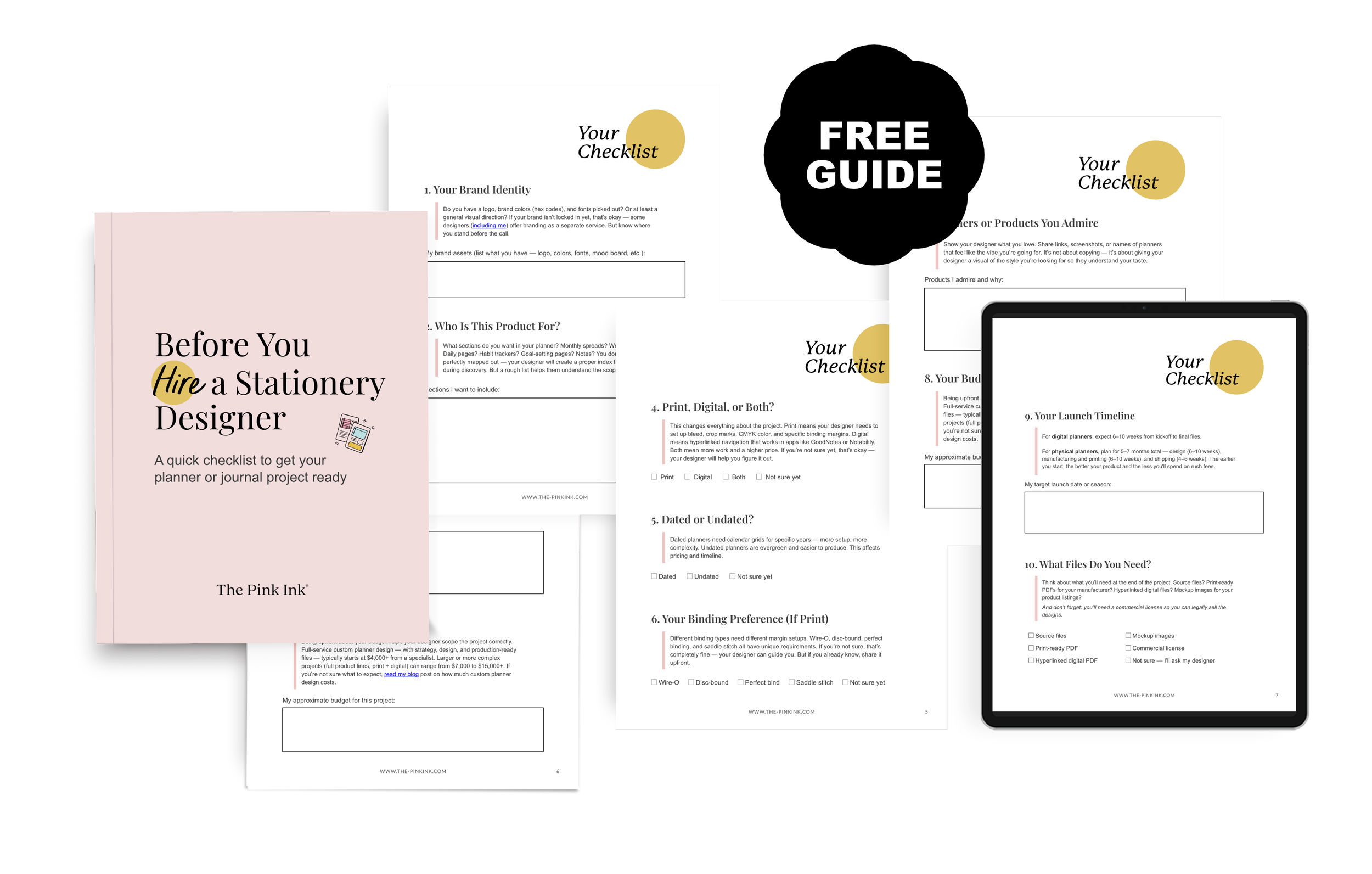
DOWNLOAD THE CHECKLIST »
Bring Inspiration Images
Collect 10-15 images of planners and other designs you love from Instagram, Pinterest, or in stores. Many find that the best way to organize inspiration is to create a Pinterest board or a new folder in your camera roll. Some best practices when hunting down inspiration include…
Screenshot planners you'd actually buy
Note what you like: color palette, typography, layout, cover material, binding type
Describe planners your audience loves like bestsellers and trending products
Prepare a Rough Page List
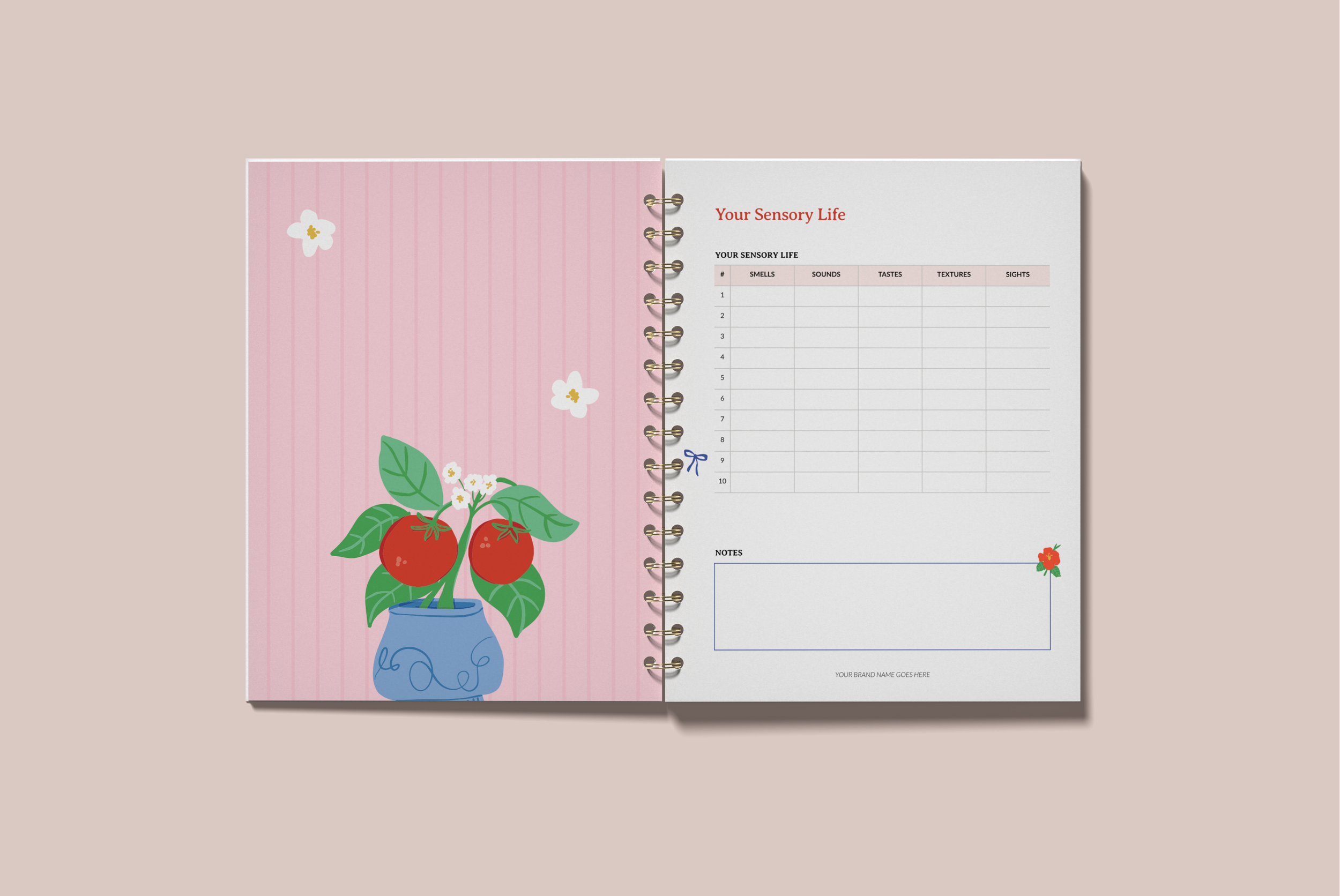
This doesn't need to be a perfect index file. But having a rough sense of what sections you want can make the call way more productive. (I wrote a full guide on what to include in your planner index file if you want to go deeper.) Think through your structure:
Front and back covers, along with the inside of each
Title page and welcome message
Annual overview (1 spread or more)
Monthly spreads (12 months)
Weekly spreads (52 weeks or Mon–Fri only?)
Daily pages, habit trackers, goal-setting sections
Notes or blank pages
How Does Budget and Timeline Affect Your First Call?
Know Your Budget (Even if It's a Range)
Having a budget range helps me help you. Different budgets lead to different conversations about design scope, complexity, timeline, and what's included. A planner with custom illustrations costs more than one with simple typography. A 500-page planner costs more than an 80-page one. For a detailed breakdown, see how much custom planner design costs by clicking here.
Have a Launch Date in Mind
When would you like to see this planner live in your shop? Timeline affects everything from complexity and revisions to production schedule and whether we need to expedite. A planner launching in 2 months follows a different process than one launching in 9 months.
Get a head start on your discovery call by downloading this free checklist to organize everything from brand assets to page lists in one simple template!
What Will the Designer Ask You During the Call?
You can expect to get asked the following questions by an experienced planner designer:
Who's your audience? What is their age, lifestyle, and profession, and what problem the planner solves for them?
Are you interested in a physical or digital planner? Or both?
What binding makes sense? Wire-O, perfect bind, saddle stitch, discbound?
How many pages roughly?
Dated or undated spreads?
What makes your planner different from every other planner out there?
💌 Interested in working with The Pink Ink to create your custom planner or journal?
Fill out an inquiry form to start the conversation, share your project details, and help me determine if we’re a good fit for each other.
What Happens After the First Call?
If we decide we're a good fit for one another, I'll send over a proposal outlining the scope of work, timeline, and investment for your project. Once everything is approved, we'll move into onboarding and officially begin the discovery process.
This is where the real collaboration begins. Together, we'll refine your ideas, explore your market, build out your planner index file, and create a product that not only looks beautiful but serves your audience well. From there, we'll move into design, revisions, and final file delivery.
Most projects take between 4–8 weeks from kickoff to final files, depending on the scope and complexity of the product.
And remember: you don't need to have everything figured out before reaching out. That's exactly what the discovery process is for (but this free checklist will help).
If you're ready to create a planner, journal, or stationery product that's thoughtfully designed around your brand and goals, I'd love to hear what you're working on. Inquire about custom planner design services and let's start the conversation.