What to Expect When You Hire a Professional Stationery Designer
You've been sitting on your planner idea for months. You've got Pinterest boards, Notes app lists, maybe a whole spreadsheet of page ideas. You know you need a designer. But every time you get close to reaching out, the same questions stop you:
How much is this going to cost? What if they don't understand my vision? What if I hate it and I've already paid? How do I even know if someone is good? What and how am I supposed to prepare?
The fear of the unknown is what keeps most brand owners stuck between "I have an idea" and "I have a product." You're not afraid of investing — you're afraid of spending money on the wrong thing and not knowing until it's too late.
I’ve been there before. And the best way to bridge that gap? Understand exactly what happens, step by step, when you hire a stationery designer who specializes in planners and journals.

The Process You Can Expect
A professional planner designer process isn't like hiring someone on a gig platform, where you submit a brief and cross your fingers. It's collaborative. Let’s break down each distinct phase so you know what to expect, why each step matters, and how to make sure you’re aligned with your designer before anything gets built.
Discovery call.
This is a conversation, not a sales pitch. You tell me about your brand, your product idea, who it's for, and what matters to you. I'm listening for alignment — do I understand your vision? Are we a good fit? If we're not, I'll tell you honestly.
Where brands get stuck: Not knowing what to bring to the call. You don't need everything figured out — that's what the call is for. But if you want to feel prepared, download the free checklist so you know what to have ready.
Proposal and onboarding.
If we're aligned, I send a detailed proposal — scope, deliverables, timeline, investment. Once you sign, you'll fill out a project workbook with your brand assets, inspiration, content, and requirements. It might sound like a lot, but it saves weeks of back-and-forth later.
Where brands get stuck: Feeling overwhelmed by the workbook. It asks for a lot because I need to understand your brand deeply before designing. But you don't need to have perfect answers — messy Pinterest boards and rough notes are perfectly fine.
Discovery brief.
Before I design a single page, I create a roadmap for the entire project — this includes your page flow, color direction, font selections, mood board, and brand summary. You review everything. We refine until each piece of your planner aligned. This is where surprises get eliminated.
Where brands get stuck: Skipping this step (or not valuing it). This is the most important phase of the entire project. Without it, you're hoping the designer reads your mind. With it, the design phase is confirmation of what you’ve planned — not a surprise.
Strategy.
I create a full strategy presentation that includes a custom market analysis, audience profile, and product positioning. This step ensures the target audience wants your product and will appeal to them. Because a strategic design is more important than a beautiful one.
Where brands get stuck: Thinking strategy is optional. It's not. Strategy is what turns a pretty planner into one that actually sells to the right person at the right price.
Design and proof rounds.
The actual design happens page by page. You get multiple proof rounds — you review, give feedback, I refine. You're involved throughout. By the time we finish, you've seen every page come to life.
Where brands get stuck: Being afraid to give feedback. Your input isn't an inconvenience — it's essential. I build in multiple rounds specifically so you can shape the product into exactly what you want.
Delivery.
You receive print-ready files, source files you own, mockup images for marketing, and a commercial license. For digital planners, you also get a hyperlinked interactive PDF. Everything you need to go list your product!
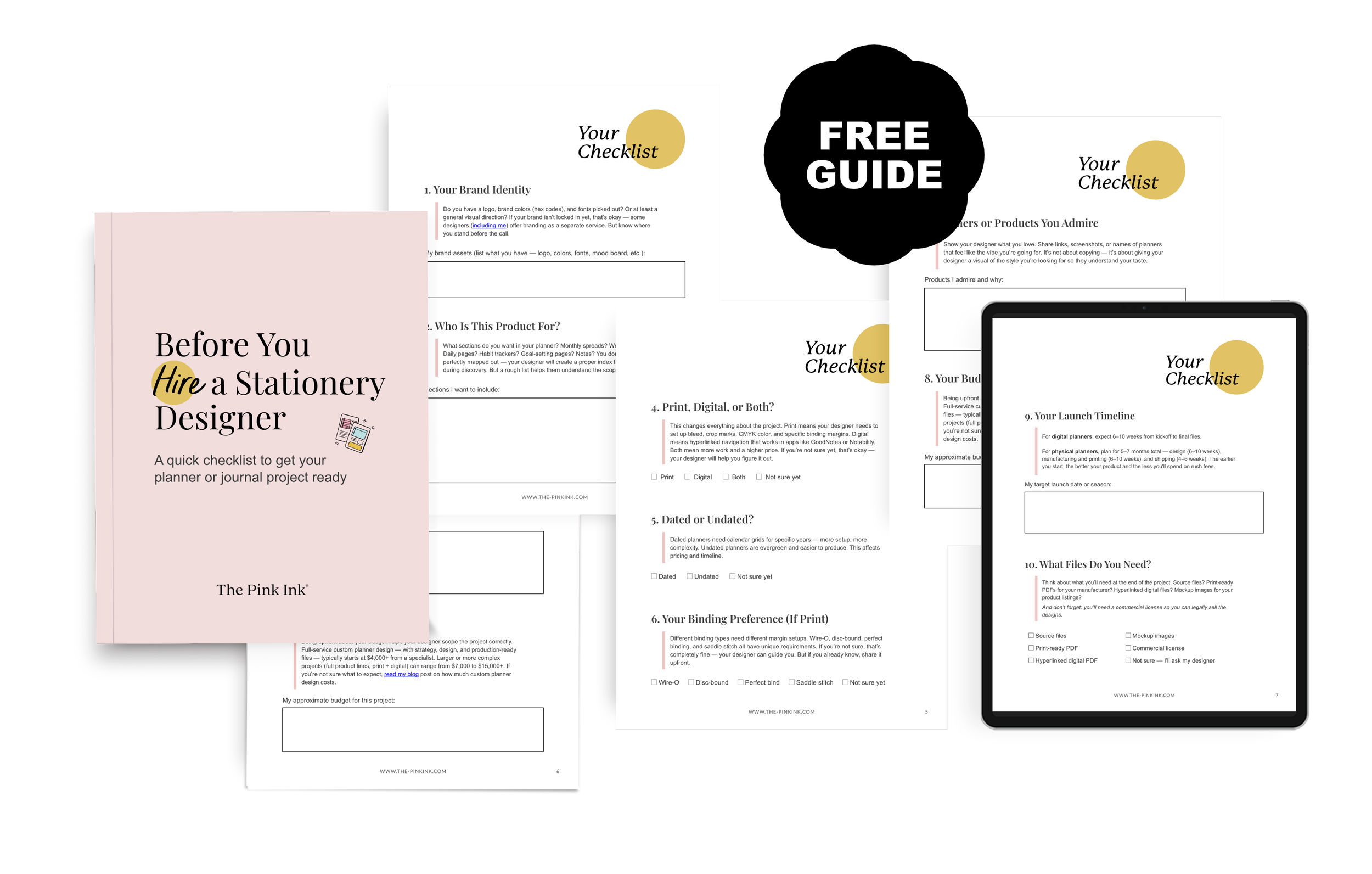
DOWNLOAD THE CHECKLIST »
What Makes Working With a Specialist Different
If you've only worked with generalist designers or gig platforms before, the biggest difference is that a custom stationery design service isn't just about making pages look pretty. It's about building a product that functions in someone's hands, is ready for your printer, and is positioned to sell.
A specialist thinks about things a graphic designer won't — page flow, writing space, binding margins, paper weight, production specs. (I wrote about the difference between a graphic designer and a stationery product designer here if you want the full breakdown.)
The process I just described exists so that by the time you hold your finished product, there are no surprises. Just a product you're proud of and your audience wants to purchase.
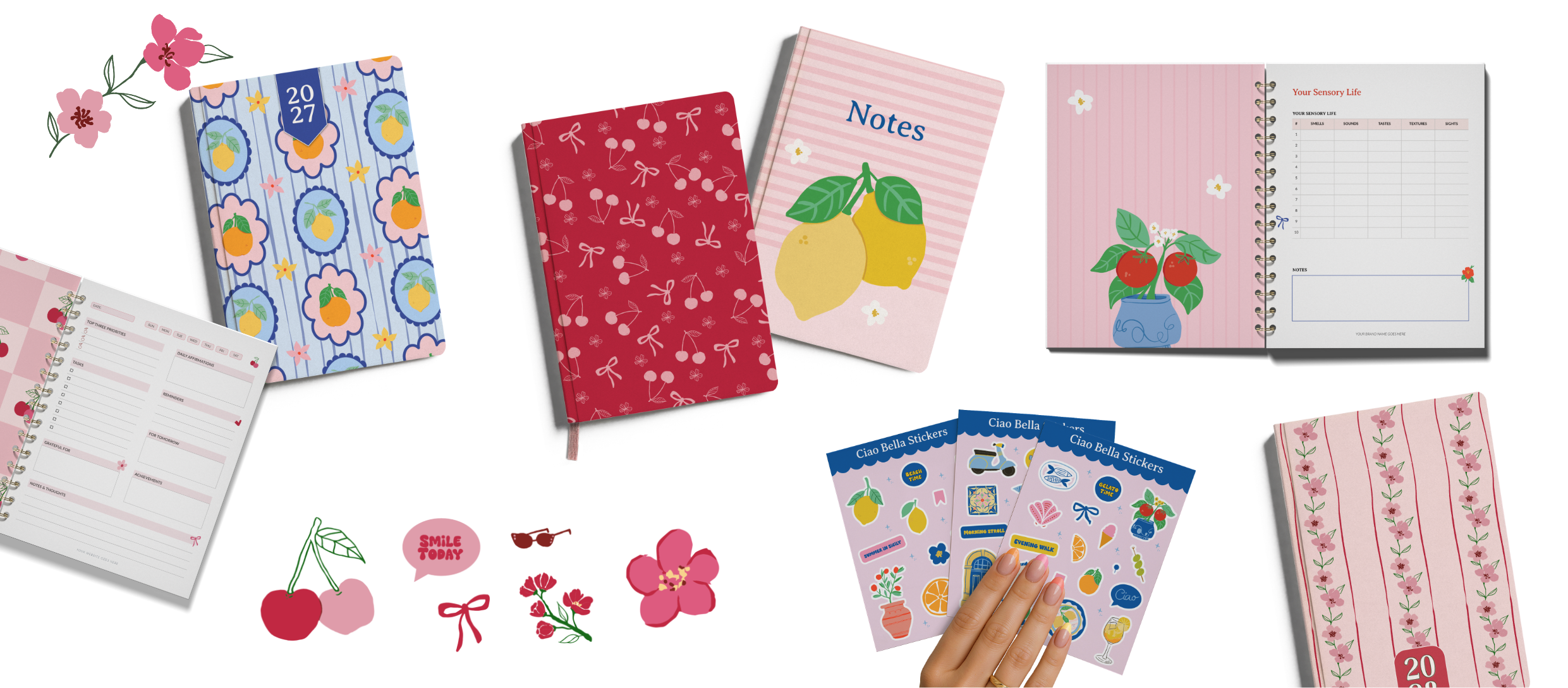
💌 Interested in working with The Pink Ink to create your custom planner or journal?
→ Have a product idea? My custom planner design service takes you from idea to production-ready files — strategy included.
Fill out an inquiry form to start the conversation, share your project details, and help me determine if we’re a good fit for each other.