I'm going to let you in on something: I started out as a DIY planner designer myself.
I used Keynote. Yes, Keynote — the presentation app. I designed planners in it, sold them, and made thousands of dollars. I loved it. It was creative and it worked.
Until it didn't.
I hit a ceiling. The more my skills grew, the more I realized I needed a program that could do more. And when I got started with printable stationery design? Keynote couldn't handle proper bleed for print. It didn't export CMYK. It wasn't built for multi-page planner production. So I moved on to professional tools, learned the craft, and built a career around it.
I share this because I'm not here to tell you that DIY is bad. It's not. It's where many great brands start. In fact, I’ve spent years teaching shop owners how to design their own products. But there's a point where doing it yourself begins to hold you back. Let's talk about how to know when you're at that point.
The Hidden Costs of DIY
My last two clients came to me saying the same thing. They'd built their planners in Canva. They'd spent weeks on it. And they were exhausted.
Not because the design was bad — it wasn't. But by the time they finished wrestling with layouts, spacing, fonts, and trying to figure out how to make their files work for their printer, they had nothing left. No energy for marketing. No time for content. No capacity to show up for their audience.
One of them told me: "By the time I want to show up for my business, I'm too tired from doing the design work."
That’s the part most people don’t factor in.
DIY doesn’t just take time—it quietly delays everything that comes after it. If you’re too tired to show up for your business, then you’ll soon find that…
The launch that keeps getting pushed back.
The product that never quite feels ready to sell.
The idea that sits in drafts instead of generating revenue.
Meanwhile, your audience is still waiting for something you already know they want.
It’s not just about how long design takes. It’s about how long your business stays in “almost ready” instead of actually moving forward.
DIY feels free. But it costs you time, energy, momentum, and lost launch opportunities. Things a growing brand can't afford to waste.
📋 Thinking about making the switch from DIY to working with a specialist? This checklist will help you get your project details organized. Download the free checklist →
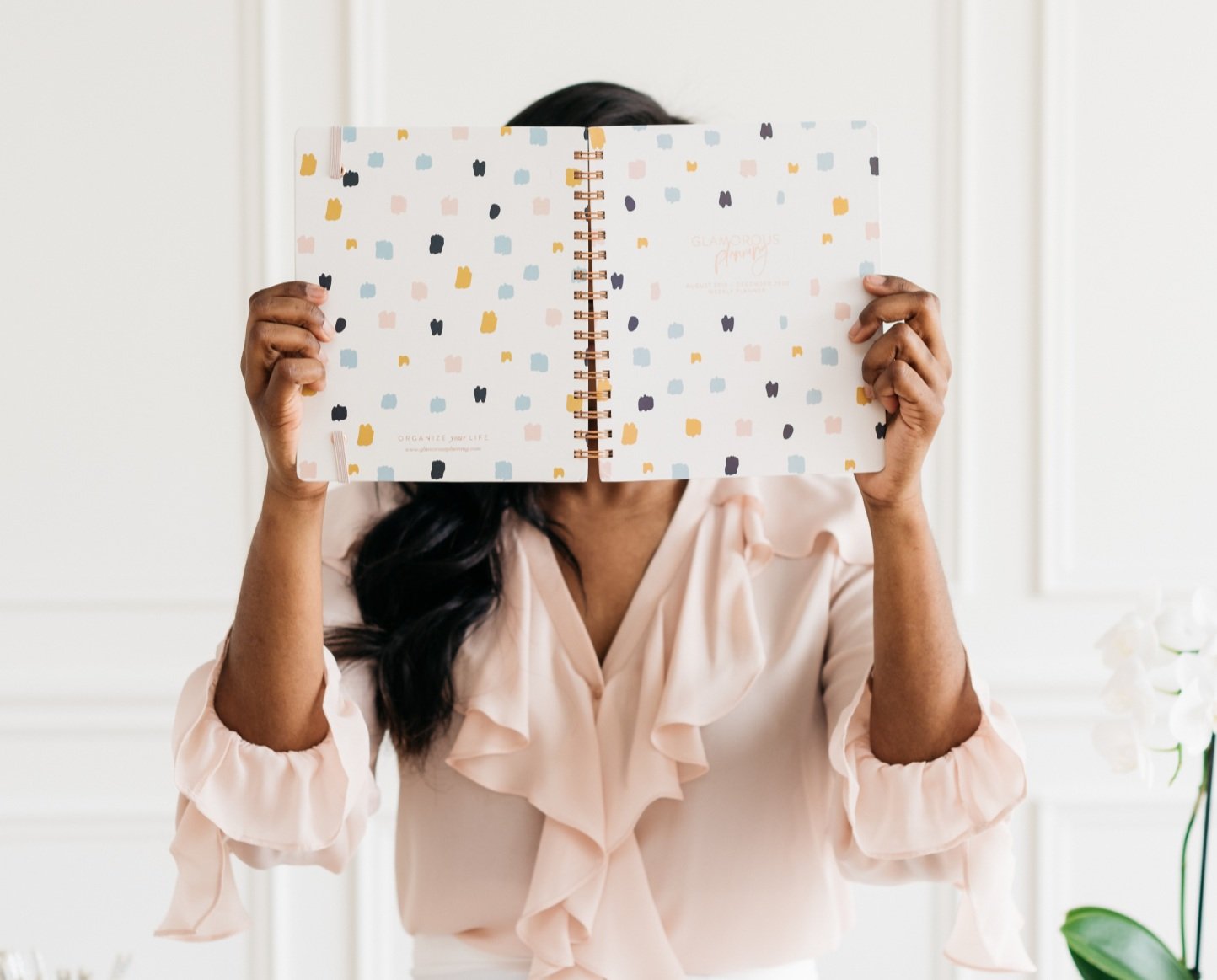
What Changes When You Work with a Specialist
When you hire a planner designer who specializes in stationery products, the experience is completely different. Let’s talk about four reasons why you can trust a creative who specializes in stationery design to build you something that DIY can’t.
The tools are different. Specialists typically work in Affinity Publisher 2 or Adobe InDesign — software specifically built for multi-page production. These tools handle proper bleed, CMYK color profiles, binding-specific margins, master page templates, and print-ready exports.
I use Affinity Publisher exclusively. I can design a layout once, then replicate it without rebuilding the layout each time to maintain consistency. For a planner with 200+ pages, master pages are what make quality possible. A tool like this also makes it possible to manage expectations with both physical and digital planners – Affinity Publisher allows me to design using the same color code system a printer does so you won’t get any surprises when you receive a physical copy of your planner. If I’m designing a digital planner, I can create a hyperlinking strategy that seamlessly connects all your planner pages.
The knowledge runs deep. A specialist is thinking about how your planner works, how it’s used, and how it fits into your market. They know how a single layout decision plays out across an entire product. They understand what your audience expects, what makes a planner feel intuitive, and what turns a good idea into something people actually come back to and use.
That kind of perspective doesn’t come from a tutorial – it comes from years of working in the industry, seeing what performs, and knowing what to prioritize before the design even begins. You could figure it out over time, but a specialist already has.
The process saves you time. Instead of all your business tasks getting pushed to the bottom of your to-do list while you design your planner, a designer gives you back your time. They will handle discovery, strategy, page mapping, design, revisions, and production prep while you focus on your business.
You’ll have an opportunity to collaborate with your designer so it never feels like you’re out of the loop, but instead of revisions taking you hours, it’ll only take you a matter of minutes to share your feedback. By the time the final files land in your inbox, everything is manufacturer-ready — no reformatting, no back-and-forth with printers, no surprises.
The stress disappears.
My clients consistently tell me that they’re not just thankful to have a beautiful planner by the time we’re done working together, but also a weight off their plate. They can breathe again. They can show up for their audience. They can focus on what they're actually good at: running their brand.
And when you work with The PinkInk, you also get access to a Planner Toolkit, which will even guide you through the process of introducing a new offer to your audience, teaching them the ropes of digital planning, and provide you with launch templates to make selling easier.
💌 Interested in working with The PinkInk!
Fill out an inquiry form to start the conversation, share your project details, and help me determine if we’re a good fit for each other.
When DIY a Planner Makes Sense
Like I mentioned before, I fully believe that DIY is the right answer at times. Here’s how to know if DIYing your planner is right for you:
You're testing an idea. If you're not sure your planner concept will sell, building a simple version yourself is a smart way to validate demand before investing in professional design.
You're just getting started. If the budget is tight and your audience is small, it may be a good idea to generate some revenue first. There’s no shame in starting with what you have!
You're making a simple digital product. A basic undated printable or a short digital download doesn't need a full production process. DIY tools handle these well.
You enjoy the design work. Some brand owners genuinely love designing and have the time for it. If that's you and it's not taking away from other parts of your business, keep going!
This is how many great brands start — including planners I made in Keynote that paid my bills for years!
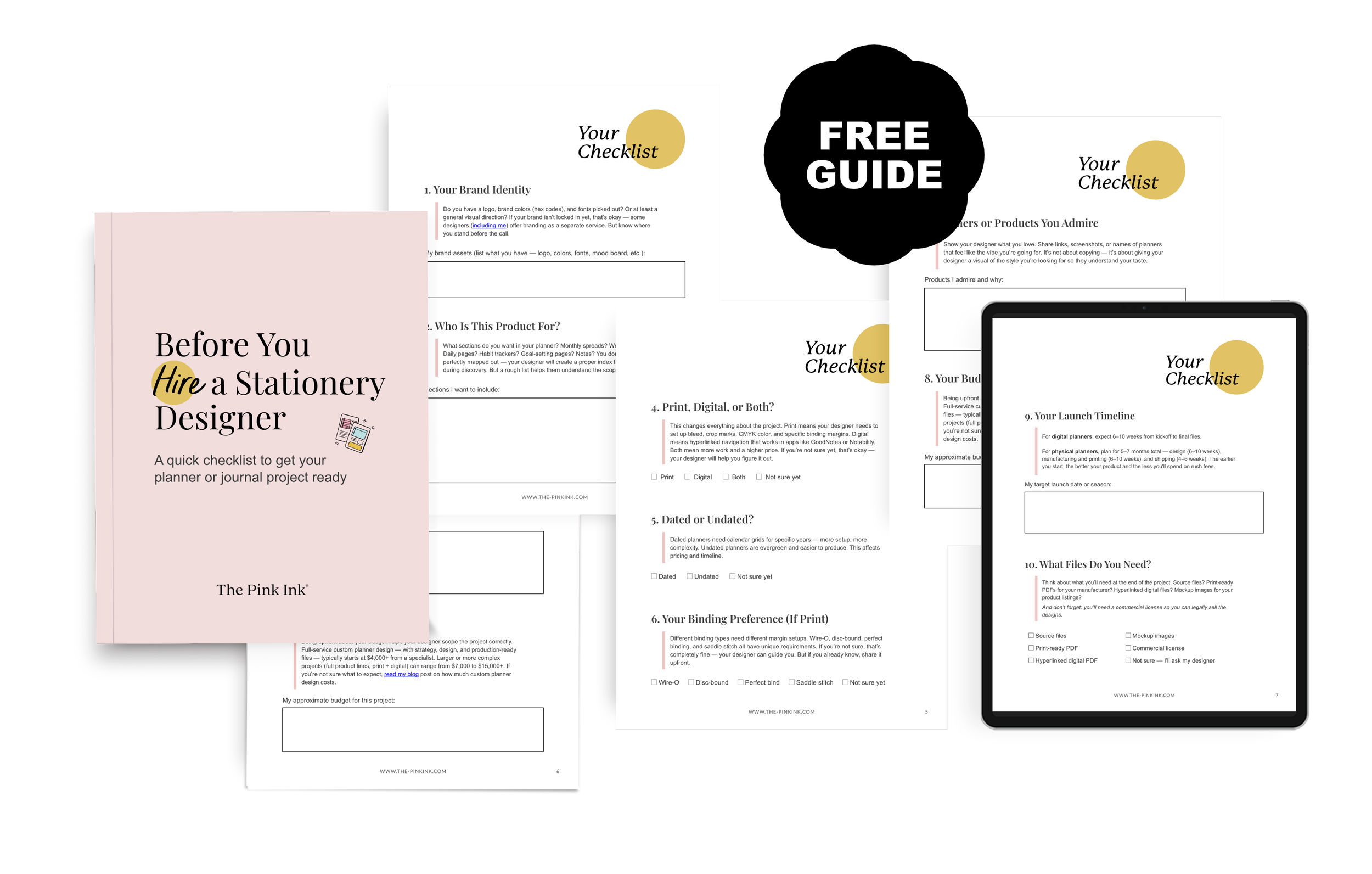
DOWNLOAD THE CHECKLIST »
When to hire a specialist to design your custom day planner or journal?
Here's how you know you've outgrown the DIY phase:
You've been "almost done" with your planner for months and it still doesn't feel right
You dread opening your design software
Your planner doesn't match the quality of the rest of your brand
You're spending more time designing than running your business
Your printer has sent your files back with issues
You're ready to go from "good enough" to "I'm proud of this product"
If you're nodding at any of these — it's time for growth! You're leveling up from doing everything yourself to putting the right person in the right seat so your product matches your vision.
Want to see what that looks like in practice? Check out how I designed a 355-page custom planner for Jessica's Journals from strategy to delivery.
The Bottom Line
DIY planner design is a great starting point. It teaches you so much about your product, your audience, and what you actually want. I'm grateful for my Keynote days — they made me a better designer.
But there's a point where doing it yourself stops saving you money and starts costing you something bigger: your time, your energy, and the ability to show up for the business you're building.
When you reach that point, hiring a planner designer who specializes in this work is one of the best investments you'll make. Not because you can't do it — but because your time is better spent on the parts of your business that only you can do.
Ready to take that leap? Or still building your case? Either way, learn how to earn $5K from digital planner sales as you think about your next move.
📋 Whether you're DIY-ing now or ready to hire, this checklist will help you think through the details that matter most. Download the free checklist →
Ready to hand off the design work?
I specialize in custom planner design in print and digital for stationery brands — from strategy to delivery. Let's talk about your project →
Want to learn more first? Browse the blog for free resources, or see the full Jessica's Journals case study to watch the process in action.